


Christian:
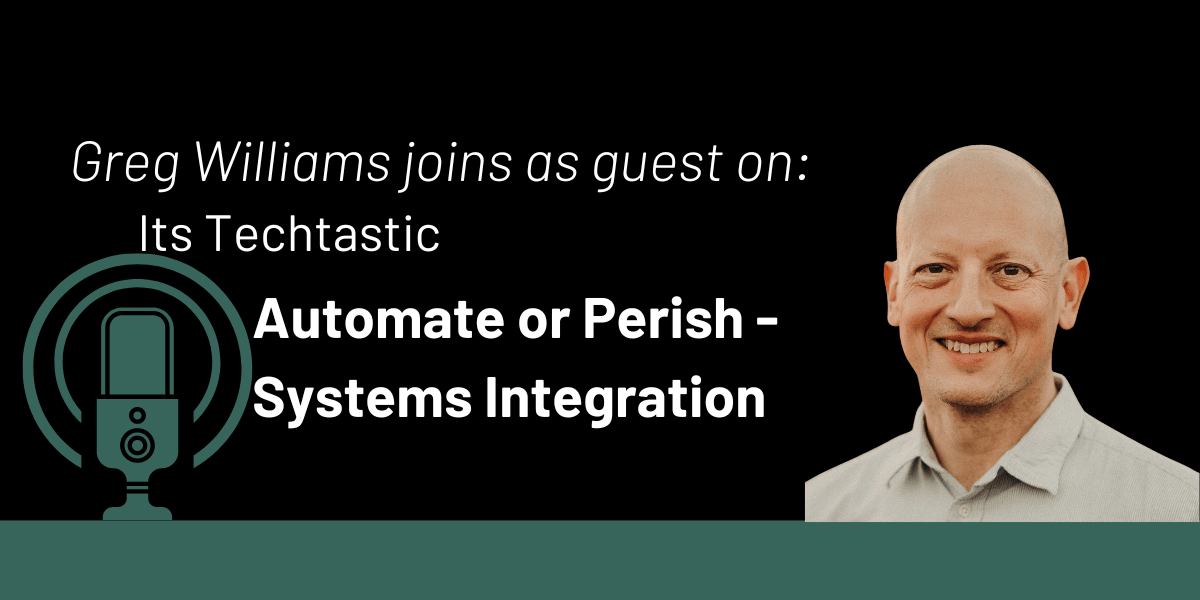
Welcome to Techtastic where we navigate the intersection of technology and business, uncovering innovations that redefine our world.
Greg, how are you?
Greg:
Hello. Good afternoon.
Christian:
You're currently the VP at Western Computer. What role do you play in the industry?
Greg:
Yeah, so we are a systems integrator, but focused on business applications like ERP, accounting, inventory control, e-commerce, all the backend office systems.
Christian:
It's actually interesting that we're talking. My company, Vala AI, works with a lot of solution systems integrators because what we're trying to do is solve the tech debt accumulation problem. We built out a platform that's really robust and quite capable, but we built our first product on top of it. I think the easiest way to describe it is it's your PR buddy or your code review assistant that goes through and looks at your overall architecture and makes suggestions for improving your patterns like the things that you're doing in your pull request.
Greg:
That's cool. It makes me think of the quote a couple of weeks ago from the NVIDIA CEO. I don't know if you saw it, but he said, "Our job is to make the coding easy enough that anyone can do it," that we don't need trained developers anymore, and I thought that was interesting.
Christian:
Yeah. This is actually what I set out to do. I've been in AI, ML for, geez, 20 years at least in one form or another, but ChatGPT, when it hit, was a big eye-opener. We were doing predictive systems for when is your package going to arrive, that type of thing. To all of a sudden have this tool, anybody can be a programmer now. Right?
Greg:
Right.
Christian:
That was the eyeopener for me with ChatGPT. When it came out, I went, "Oh, my God, this is actually that moment because, now, the computer is talking to me in the way that I understand. I don't have to talk to it in the way that it understands. That opens up every door for automation, for doing all the fun stuff that us, wizards of the technology world, that arcane knowledge that we had, now everybody's got access. That's what I thought. We're not there yet.
That big gap is what Vala actually is set out to do. My original thing that I wrote a year ago was trying to fill that gap to say, "It's not actually true yet. You say you want to build something." The person I always use is my wife, multiple advanced degrees, lots of professional certifications and all that kind of fun stuff, but when she gets hired by a company to take all that experience and knowledge and put it to practice, what does she end up doing? She ends up managing technology systems that don't do a very good job of solving a problem. She always needs IT tech support to make it do those things. How do you fill that gap? That's what I tried to build and ended up being that there's a lot of reasons why that doesn't work. There's a reason that SIS exist. It's about that complexity of that ERP and that CMS and the WMS and all the systems, that you've got to be able to work in that space.
Greg:
I might be a little jaded, but sometimes I think technology just keeps repackaging itself into the latest solution. It was interesting to hear you say that we've had AI and ML for 20 years, because we have. For guys like us, we could use it, but it wasn't accessible to everybody else, and it still isn't. I remember 15, 20 years ago, the big thing was workflow and you would go do a software demo, and everybody, all the executives would be like, "Can I workflow that? Can I workflow that?" Sure, you can workflow it all you want, and then you'd get in the project and, of course, the workflow wouldn't do it. You'd have to have a developer come in and extend the workflow, and the developer would be looking at me saying, "Why don't I just write this the way you need it instead of using this workflow?"
Christian:
It's funny. You're describing exactly how I think of it, too. I've gone full circle on the open-source community and componentization of everything, but it goes back to, when I sit down and write something myself, I don't use any external packages. I never do. I hate them because I spend more time figuring out how to implement it with their little library than just sitting down and writing it myself.
As we started building out this company and looking at those similar problems, every time you use an off-the-shelf solution for something, if it's your ERP or your CMS or whatever, you're pulling forward a bunch of past decisions that have been made, and a lot of those decisions were made to abstract away some concepts so that, theoretically, you could integrate with it. That's what most of the solutions, systems integrations' solutions integration is. It's making things talk to each other.
Greg:
Yeah, and any conversation with external vendors or other software companies that you're trying to integrate with, the first few meetings are all agreeing on terminology. What is your definition of the word "container"? Is it a box or is it a shipping container, because it's different? The Microsoft Dynamics software that we integrate all the time, they use the word "container" very generically. It could be a cardboard box or it could be a pallet or it could be anything. It's just a word for them, but then sometimes, if you tell a developer, "We need to do something with a container," they're thinking something entirely different.
Christian:
Okay, it's... Yeah.
Greg:
Right. Exactly, so all these meetings come down to let's agree on the terminology first and then let's go from there.
Christian:
Yeah. I gave a talk a long time ago on the definition of "done" because I think that's the first thing you have to define. Right? When we say we're agreeing to deliver this thing, what are we delivering fully? Everybody's expectations put all on the table, we need to know the full definition of done. People get angry with you when you try to start at that point because they're like, "Well, everybody knows what that means." Like, "You and you just gave different definitions from what we say when we mean done. When I say done, I mean it's fully tested, it's fully deployed. If customers can use it, then it's done.
Greg:
Right, and as a systems integrator in the ERP world, it's never done. You're constantly evolving that system. We get customers. We build the code. We build the system. We get them live. We do two weeks of training. The team thinks they're done, and then the accounting people say, "Oh no, we're not done. We got to close our first month and finalize that, then we're done," and then we get back to operations. "Well, there's all these things you told us were going to be phase two that we couldn't get to in the implementation. Now, we got to do those, or we're not done." In our world especially, it feels like we're never done. We're constantly optimizing these systems.
Christian:
I wonder, isn't that the business model? Isn't that the whole point of being in that space? It's that there's always more automation that the company needs and wants, and that's a good thing. Right?
Greg:
Yes, it is. It's a great thing. Yeah, and we're looking for 10-to-15-year, or longer, relationships with our customers. We have those. We're there to advise them. We're there to guide them on what technology trends are coming out. For example, a lot of them are coming to us right now and saying, "Hey, how should I use this AI?" and, most of the times, well, you're not quite ready for it.
Christian:
You're still figuring out this whole cloud migration that you should have done 10 years ago.
Greg:
Yeah. Exactly. Yeah, that's true.
Christian:
I got to know the SIS space pretty well in my last 15 years of roles because it was my secret weapon. I'd get pulled in by a Nike to increase their rate of digital innovation. You have the same problems at every company. If you're not Google, Facebook, Amazon, Netflix or a couple others where all the best engineers are going to be drawn towards, it is very difficult to get critical mass. You have to have it, so you build up these big teams with maybe you've got 10% of just amazing people in your team, but that other 90 percent is dragging on it and making it very difficult to proceed, so you've got the people problem. You've got a cultural problem because you're not a digital-first company. You sell shoes, not technology, and so I would bring in these hired guns that had critical mass. That's what their whole business is, right?
Greg:
Right.
Christian:
You've got great people. I'd bring them in and say, "Okay, we are going to migrate from on-prem to in-the-cloud. We're going to migrate from X to Y because I'm trying to pay down this colossal amount of technical debt that's been built up over time." I know and you know that this is just the beginning of that process because that technical debt also stopped all the other things that the business wanted. I'm in sales. I need to know whatever. I'm in marketing. I need to know something specific. I'm in inventory management. I need to have predictive, et cetera. All those wants, they don't even ask anymore. The instant you unplug that bottleneck and, all of a sudden, the technology unlocks opportunity within the business, which is the whole point of doing software, we're automating all these things.
Greg:
Yes, and automation is where it's at. I mean, that's where every company needs more of that if they're going to survive.
Christian:
More automation faster.
Greg:
Yeah, it's automate or die really. I mean, that's what it comes down to. Years ago, I did a go-live of a warehouse management system. This was when I was still doing the projects myself. It was a rough go-live. Inventory wasn't correct. Long story short, we had to stop the go-live, count the whole warehouse, were there 'til 4:00 AM, back at 8:00 AM, and everything worked smoothly after that.
At the end of the three or four days onsite there, the owner of this manufacturing company asked to meet with us, call us on the carpet, and he said, "In World War II, we built the B-52 bomber with a big, cheap pencil and a pad of paper. Why do we need all these computer systems?" I got to give the CFO credit because, with a straight face, he said, "Well, in 1985, you had 25 people in accounting and, now, you have five. Do you want to go back and hire all those people?"
Christian:
Well, here, I'll give the counter argument though. How many software engineers do you have on the team now?
Greg:
Right. Yeah, he's got four IT guys. There is a counter argument there, but we are getting more efficient over time.
Christian:
Absolutely true. Yeah, and the long arc of history like more automation, less and less human intervention, especially where were not good like accounting, it's not something that people wake up at night and go, "Oh, I can't wait to get pen and paper and figure out where the books have gone wrong." Nobody want... Well, not nobody, very few-
Greg:
There are some people like that, Christian.
Christian:
Very few people like that, right?
Greg:
Yes. Yes. I happen to work with some of them, so I have to defend them.
Christian:
I do, too. As I said, I was like, "Ah, there's a lot of them, not as many as we needed," but I think that actually it's very telling in the moment in time that we're in. I said that there was a lack of critical mass in most companies to meet the needs of their technology wants and desires. That's been true for a while. For the first time, that barrier has dropped to the floor with this set of generative AI tools that are coming into the world. The problem though is is still that gap between what I have and what I desire, and I can't fill it without having some software development teams getting involved to bridge.
You might have an AI tool that allows you to do like, "Hey, I can automatically generate a bunch of spreadsheets and all that." That's fun, but it doesn't connect into my ERP. What we're seeing is that desire state getting really high really fast, but we still have this huge gap between how many software engineers in the world are capable of building into those systems and the desires of the business and the people in the business to do something with it, but we're starting to also see price pressure on that top line. The hourly billable rate that SIS can charge is down 20% in the last year because there's this perception that, like, "Oh, no, I can just have my own teams do it with this AI tool," which isn't there yet.
Greg:
Right. Oh, yeah, we tend to deal with companies in the small and mid-market, so less than 500 million revenue for the most part, let's say. Especially at the lower end of that, they don't have big IT teams. They depend on SIS for everything. Maybe they have a few guys in IT, but we're seeing a number of challenges to that market. One of them is, as they transition to the cloud, they need a different skillset from their IT team.
Christian:
Yeah, big time.
Greg:
They have IT guys that are used to patching servers and interacting with SQL and stored procedures and stuff like that. Now it's like you're going to write code against an API. It's an entirely different skillset. That's the major shift we're seeing. As these small-to-mid-sized businesses digitally transform into the cloud, they need a different level of staffing internally.
Christian:
So, part of a transition, when you're coming in and you're doing these integrations and you're trying to help them modernize, part of it is getting the staff that's there up to that skill level. I imagine part of it is al